

Being aware, taking a few basic precautions and having a plan can help to keep you and your loved ones safe and able to respond quickly when unexpected events occur. Being prepared helps keep you and those you care for safe.
Family and emergencies
Do
- Teach your children about emergencies and how and when to call 999. Little Lifesaver is our fun and educational campaign aimed at youngsters to teach them about the ambulance service.
- Set a monthly reminder to test your smoke alarms and CO2 alarms.
- Write down key phone numbers on paper, including the contact details of people you may need to reach urgently. Use the Government’s printable household emergency plan to keep all this information together in one place.
- If you have an underlying health condition, a severe allergy or take medication, consider getting a Message in a Bottle. Paramedics, police, fire-fighters and social services support this Lions life-saving initiative and know to look in the fridge when they see the Message in a Bottle sticker. It helps by saving valuable time in an emergency to identifying an individual and find out if they have any allergies or take special medication.
Be ready checklist
The Government suggests being ready for 3 days in an emergency situation to help you manage while support reaches those most in need. Doing this is easier than you might think. You could have some of the items at home already. You don’t need to do it all at once. Build up your readiness gradually over time by taking it step by step, and picking up an extra item or two when you can.
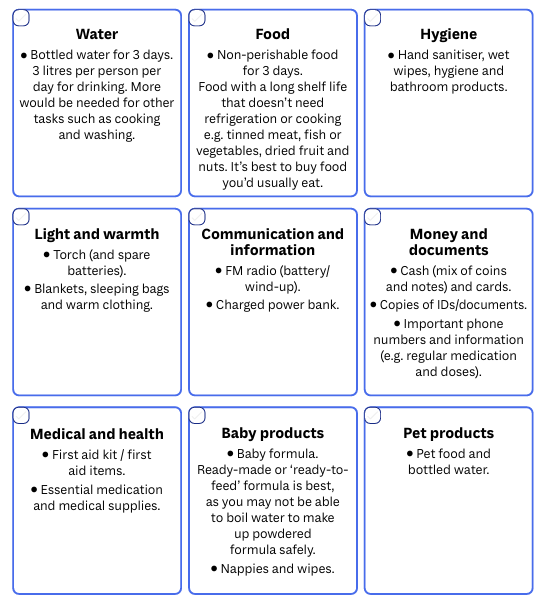
To find out more simple steps you can take visit the Government Be Ready website.
Utilities and weather
Do
- Priority Services Register (PSR) – check whether you or anyone you care for qualifies for gas, electricity, or water supplier’s Priority Services Register (PSR). It’s a free UK-wide service which provides extra advice and support, including help during supply disruptions.
- Flood risk – Check your long-term flood risk for your area and sign up for flood warnings by text, phone, or email to stay informed during severe weather.
- Check for weather warnings in your area from the Met Office to keep you and your loved ones safe during adverse weather.
- Check for weather health alerts in your area from the UK Health Security Agency (UKHSA) – providing key advice when adverse temperatures are likely to impact on the health and wellbeing of the population.
- Find out more about your local resilience forum and important information and advice for locals in their community risk registers (West Mercia, West Midlands, Warwickshire, Staffordshire)